Wasps
Found a Wasp Nest? What Edmonton Homeowners Should Do Next
By Superior Pest Control Team
Finding a nest near a doorway, deck or roofline is a reason to pause—not to test whether it is active. Wasps can defend a disturbed nest and may sting more than once. Keep your distance, move people and pets away from the area, and collect only the information you can safely observe before asking about next steps.
Observe from a distance without disturbing the nest
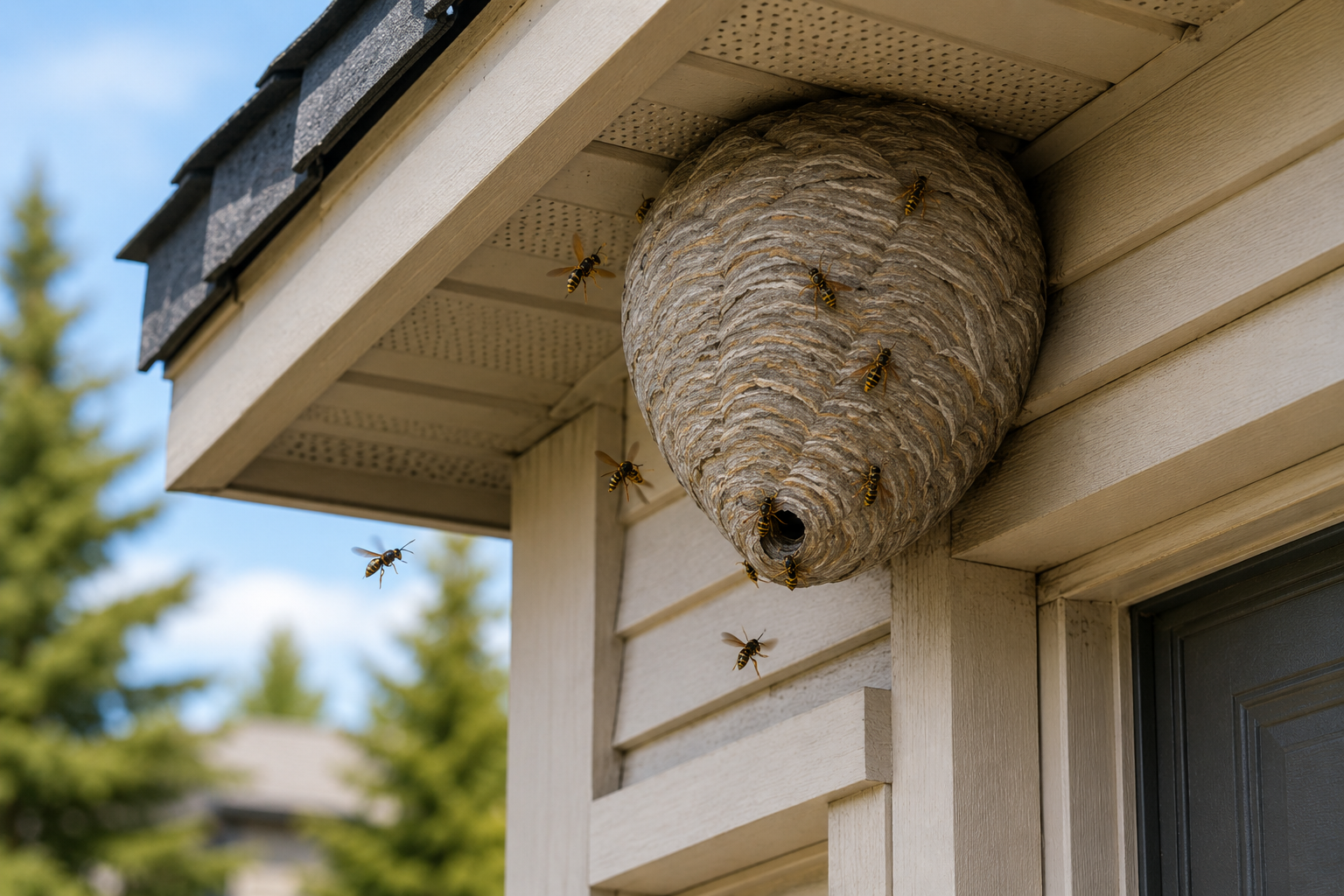
If you notice a paper-like nest or repeated insect traffic into one opening, stay back. You do not need a close-up photograph, a ladder or a probe to explain the concern. A wider view taken from a safe location can show the part of the property involved without bringing you close to the activity.
Watch only if you can do so without crossing the flight path. Note whether insects repeatedly enter a visible nest or disappear into an opening beneath an eave, deck or other structure. Do not touch, knock, cover or otherwise disturb the nest or its entrance. Health Canada warns that disturbing a wasp nest can trigger a defensive reaction.
Consider the people and pets using the area
A nest beside a frequently used entrance deserves attention because people may pass close to it without noticing. Keep children and pets away and choose another entrance or route where possible. Tell other household members about the location. Do not ask someone to investigate at close range simply because they have not reacted to stings before.
If the activity is near a shared walkway or rental property, notify the owner or property manager with the location and a photograph taken from a distance. Avoid setting up a barrier if doing so would bring you close to the nest. Keeping distance is a temporary precaution, not a treatment or a guarantee that stings cannot occur.
Look at doors, decks and rooflines from accessible areas
Repeated flight paths can be more informative than a single wasp visiting a flower or food source. Alberta Health lists eaves, attics, window frames, crawl spaces and vents among places where caution is warranted. A nest can be concealed, so the absence of a visible hanging structure does not settle the question.
Describe the activity rather than naming a species you cannot identify. For example, say that insects enter the same roofline opening repeatedly, or that a nest hangs beneath the deck. Stay on the ground and do not remove trim, open a cavity or block the opening. Hidden activity and difficult access are reasons to seek an assessment, not to improvise a removal method.
Avoid actions that can increase the risk
Do not hit the nest, shake the supporting structure or attempt to bring it down. This article does not provide pesticide application or DIY removal instructions. A visible nest does not make the task straightforward: location, height, access and the movement of people around it all affect the situation.
Around stinging insects, Alberta Health recommends avoiding sudden movements and moving away slowly. Do not swat at insects near a nest or remain in the area to test their response. If activity prevents safe access to part of the property, explain that when you call a professional and ask what precautions to take while awaiting advice.
Know when a sting requires urgent help
Health Canada advises immediate medical attention for symptoms such as unusual swelling, itching, dizziness or shortness of breath after a sting. Alberta Health describes anaphylaxis as a life-threatening reaction that needs emergency treatment. Call 911 for symptoms of a severe allergic reaction, including breathing difficulty, rather than waiting for pest-control advice.
People with a known sting allergy should follow their clinician’s emergency plan. Pest-control information is not a substitute for medical care or advice about an individual’s reaction. Keeping away from the nest remains important whether or not anyone in the household has a known allergy, because prior experience does not make close contact a sensible precaution.
When to ask about professional removal
Request professional advice if a nest is close to doors, decks or other areas people use, if the activity enters a building opening, or if access is difficult. Share the location, whether the nest is visible and which routes are affected. There is no need to approach again to obtain more detail before calling.
Superior’s Edmonton wasp-removal page explains the assessment to discuss. The appropriate service depends on the location and access, so confirm the scope rather than assuming every nest can be handled in the same way. Until you receive advice, maintain distance and keep people and pets out of the affected area.