Rodents
How Mice Get Into Edmonton Homes—and What to Check Before Winter
By Superior Pest Control Team
Before winter, a walk around your Edmonton home can reveal openings that are easy to overlook during warmer months. Mice need only a small gap to gain access. Checking the building, noticing early signs and reducing food sources are useful first steps—not a guarantee that an existing problem is resolved.
Start with the outside of the building
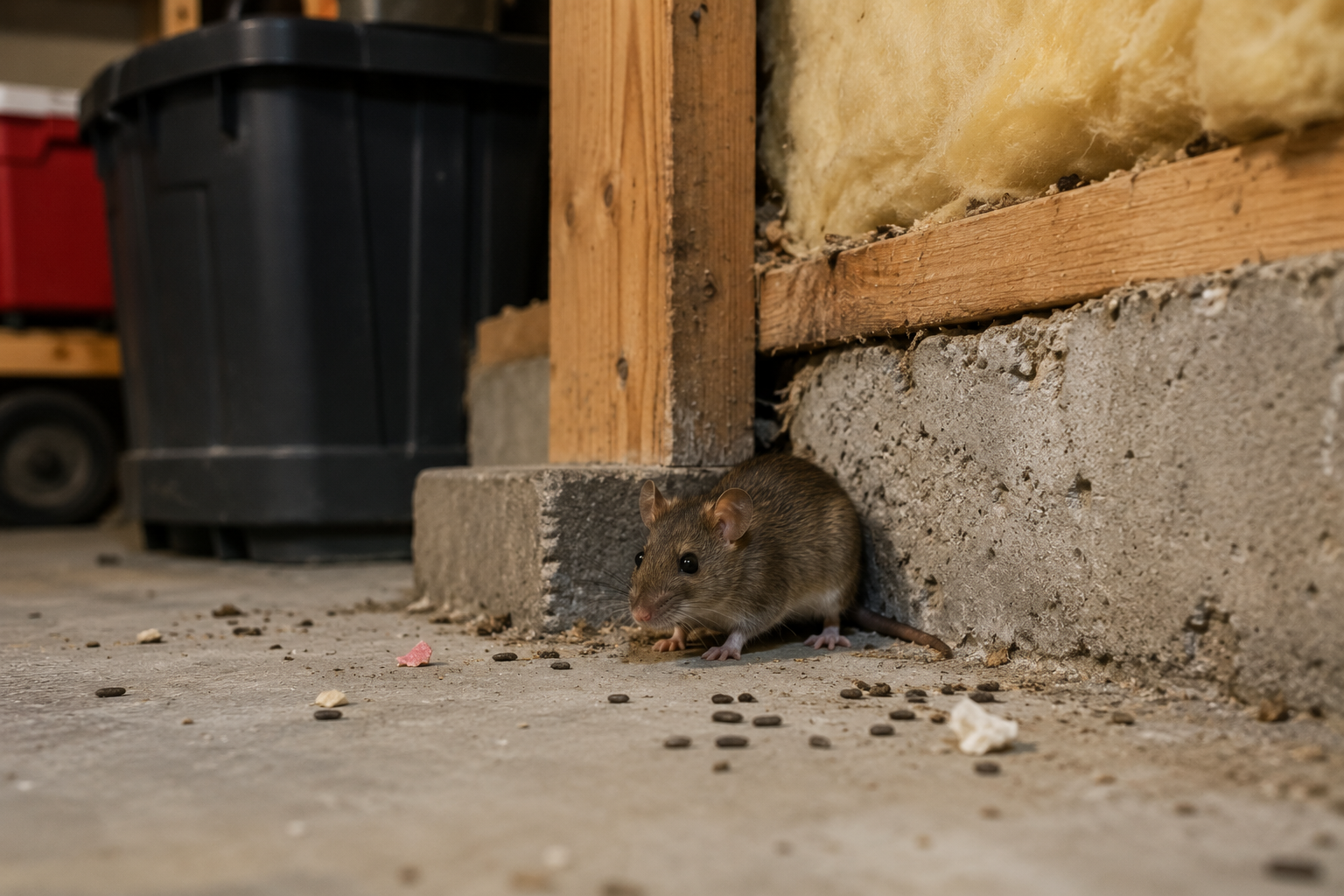
Health Canada notes that mice can squeeze through cracks as small as a dime. An opening does not need to look like a doorway to matter. Check where different materials meet: the foundation and siding, exterior door frames, and the areas around pipes or cables entering the home. Look from ground level without climbing or removing building components.
Make a short list of damaged seals, cracks and openings, with photographs showing their locations. Distinguish a gap that needs repair from an intentional ventilation or drainage opening. Do not simply block vents or alter utilities. If you are unsure how an opening should be protected, ask an appropriate building professional or pest-control provider before changing it.
Give the garage its own inspection
Garages often combine access from outdoors with undisturbed storage. Inspect the lower corners of the garage door, the bottom seal and the door leading into the house. Daylight showing through a closed door can help you spot a gap worth checking, although it does not prove that mice are using it.
Look behind stored items where you can do so without disturbing suspected droppings or nesting material. Cardboard, pet food and spilled birdseed can make an already accessible space more attractive. Keep the floor clear enough to inspect along walls, and choose sturdy containers with secure lids for food or feed. Repairing a seal is useful prevention, but it may not address mice already indoors.
Check utility openings without disturbing equipment
Pipes, cables and other services create transitions through exterior walls. Check for visible gaps around these areas and around worn door thresholds. A careful assessment is more helpful than filling every opening you see: ventilation, drainage and safe equipment operation must be maintained.
Ask for help where openings are high, concealed or close to equipment you cannot safely access. Avoid climbing onto a roof or reaching into a wall cavity. Take an accessible photograph instead. If there is recurring indoor activity, share the photographs with the person assessing the property so that possible entry points can be considered alongside the evidence inside.
Recognize early signs—and handle evidence carefully
Possible signs include damaged food packaging, gnawing, droppings and movement or scratching heard at night. No single sound identifies a pest. Note where and when you noticed it, whether evidence appears in more than one area, and whether it returns. A photograph taken without touching the material can help explain the concern.
Do not dry sweep or vacuum suspected rodent droppings or nesting material. Public Health Agency of Canada guidance warns that disturbing contaminated material can release particles into the air. Keep people and pets away and consult its current cleanup guidance or a professional before tackling the area. This precaution does not mean that every mouse carries hantavirus; it means suspected contamination deserves appropriate care.
Make food and storage less accessible
Store pantry food, pet food and birdseed in secure containers. Check bags that have been left in a garage or storage room, clear spilled feed, and keep waste contained. Include the less obvious sources: a pet feeding area, recycling with food residue and snacks stored in a basement or spare room.
Reduce piles of paper, packaging and other clutter that make inspections difficult. Leave enough space around stored goods to see the edges of a room. These habits can reduce available food and hiding places, but they do not replace an assessment when fresh signs continue. An infestation is not a judgement about housekeeping; an accessible building can have problems even when it is regularly cleaned.
When to request professional help
Ask for an assessment if you find repeated droppings, damaged packaging, persistent sounds, or evidence in several locations. Also get advice when potential entry points are inaccessible or you cannot distinguish a necessary building opening from a defect. Tell the provider about the rooms involved, recent changes and any prevention steps you have already taken.
Superior’s rodent-control service page explains the assessment and service options to discuss. The right next step depends on the evidence and property conditions; do not assume that a particular repair, treatment or follow-up is included. A before-winter check is worthwhile, and fresh activity at any time of year deserves attention.