Ants
Ants Keep Coming Back? What Edmonton Homeowners Should Check
By Superior Pest Control Team
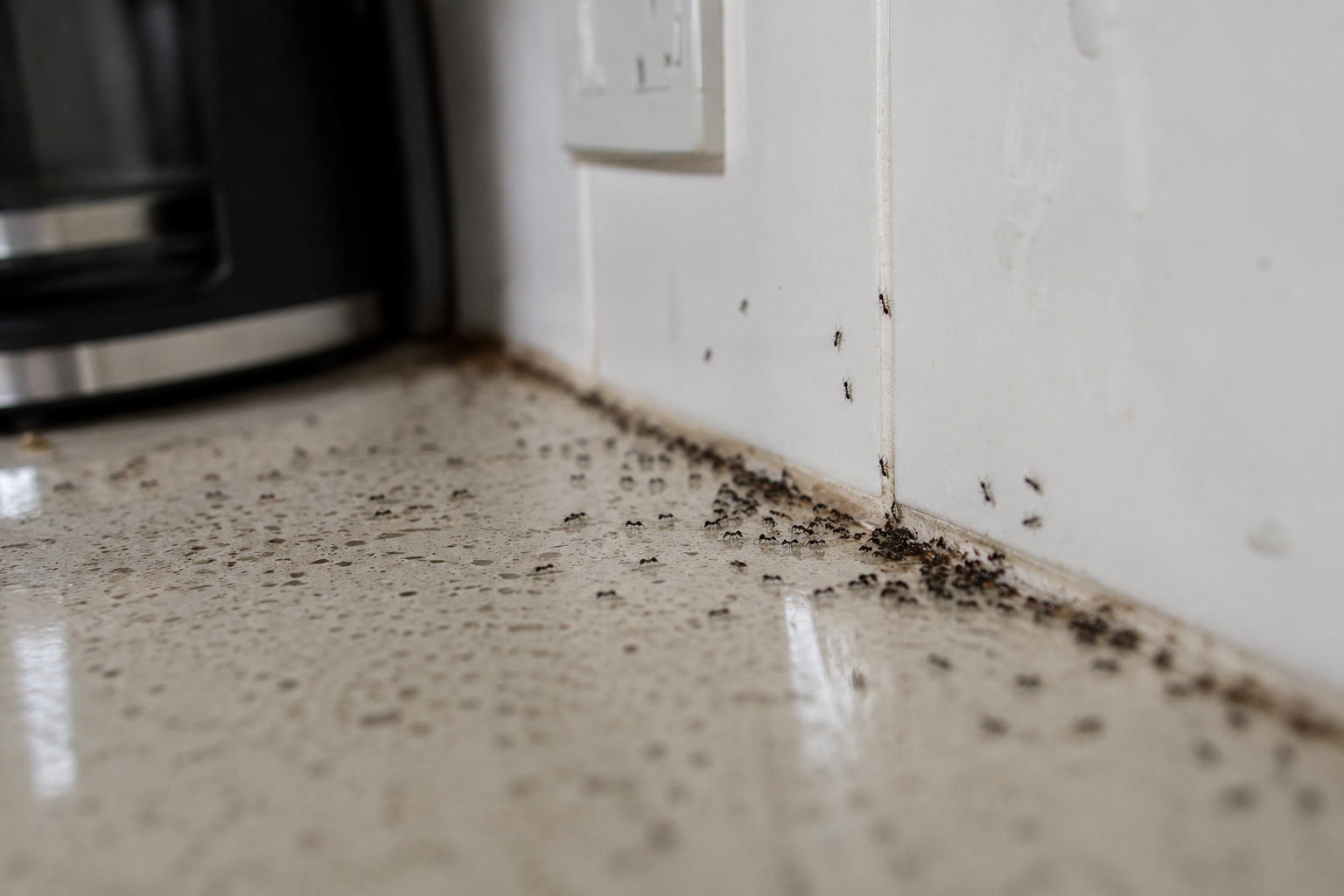
A line of ants that returns to the same kitchen corner can be frustrating, especially after you have cleaned. The visible trail is a clue, not a complete picture of the problem. For an Edmonton home, a useful starting point is to observe the route, remove accessible food and moisture, and determine whether professional identification is needed.
Follow the pattern, not just the individual ants
Health Canada explains that a scout ant can leave a scented trail after finding food, allowing other workers to follow. That helps explain why activity often appears as a repeated route. Notice where ants first become visible, where they go and what they seem to be reaching. You do not need to pull apart cupboards or disturb a suspected nest to collect useful observations.
Write down whether the trail appears at a particular time or after food is left out. A clear photograph of the ants and a wider photograph of the route may be helpful during an assessment. Avoid deciding the species from colour or size alone: ants differ in nesting habits and the appropriate response may depend on identification.
Check food sources that are easy to miss
Look beyond crumbs on the counter. Food residue can collect near appliances, beneath a dining table, in recycling containers and around pet bowls. Health Canada recommends tightly closed food containers, clean counters and floors, rinsed recycling and regular removal of kitchen garbage. Choose manageable steps that you can maintain rather than an elaborate one-time clean.
Pay attention to containers that look closed but have sticky residue on the outside. Clean accessible spills and store attractive foods securely. Keep pet feeding areas tidy without changing your animal’s needs or routine without advice. Removing a food source can reduce a reason for ants to forage indoors; it does not establish where the colony is located or promise that the activity will stop permanently.
Look for moisture and likely entry areas
Check around sinks, plumbing fixtures and other accessible areas for moisture or leaks. Record visible gaps around door frames, window frames and utility transitions. An ant seen beside a pipe may be using a nearby route, but its location alone does not prove the nesting site. Observing several visits can make the pattern clearer.
Arrange repairs for leaks and obvious building defects as appropriate. Do not seal a ventilation or drainage opening just because insects are nearby. If the route disappears into a wall or a difficult-to-access area, document it and ask for an assessment rather than opening the wall yourself. Moisture and access deserve attention alongside the insects you can see.
Separate indoor trails from outdoor activity
Ants around a foundation, paving or garden do not automatically mean there is an indoor infestation. Many ants play useful roles outdoors. Check whether the same area connects to indoor sightings, or whether activity is confined to the yard. A recurring indoor route deserves closer attention than an isolated ant seen on a patio.
Look for activity at accessible foundation edges, door thresholds and the points where landscaping meets the home. Keep your observations specific rather than assuming every outdoor colony needs treatment. If you see sawdust-like material or larger ants near damp or damaged wood, mention that during an assessment. Those observations may be relevant to carpenter ants, but they still require identification.
Why cleaning may not solve the whole problem
Cleaning is worthwhile because it reduces accessible food and residue. However, the ants walking across a surface may be only some of the workers connected to a nest elsewhere. Repeated activity after cleaning is a reason to review the route and species, not evidence that you have failed to keep the home clean.
Avoid experimenting with treatment around a suspected colony before identifying it. Alberta Health notes that disturbing pharaoh-ant colonies can contribute to new nests forming. That is a species-specific concern, not a reason to assume every ant behaves the same way. Professional advice can help avoid a response that is unsuitable for the pest or property.
Prepare useful information for an assessment
Contact a pest-control provider when trails recur, activity appears in several rooms, or you cannot identify the ants and their route. Share photographs, the areas involved, any moisture concerns and what you have already done. Mention previous products or treatments so the provider can take that history into account without guessing.
Superior’s Edmonton ant-control page describes the service discussion and assessment process. Ask how identification affects the proposed plan and which steps you should take before a visit. Food storage, moisture repairs and sensible observation remain useful habits, while the treatment scope should be confirmed for your situation.