Seasonal Prevention
Firewood and Indoor Pests: Winter Storage Tips for Edmonton Homes
By Superior Pest Control Team
Firewood is a natural material, and insects can be carried indoors on or inside it. Finding one near a log basket is a reason to check the wood and observe what happens next, not proof that an Edmonton home is infested. Sensible storage focuses on keeping an outdoor supply dry, bringing in manageable amounts and maintaining the indoor area. Identification matters if activity continues away from the logs. Avoid treating every insect associated with wood as a building pest or reaching for a spray.
Understand how insects travel with logs
The Canadian Food Inspection Agency explains that insects, eggs or larvae may be on or in firewood. Moving wood can also move pests into new areas, which is why sourcing and transport deserve attention as well as indoor storage. An insect that appears after wood is brought inside may have been carried with the log rather than originating in the building.
That timing is useful information, but not a species identification. Note when the wood arrived, where it was placed and where insects appeared. Take a clear photograph when possible without peeling apart every log or spreading bark through the room. Different insects have different life cycles, and their presence does not automatically mean they can establish in household timber.
Keep the main supply outdoors and dry
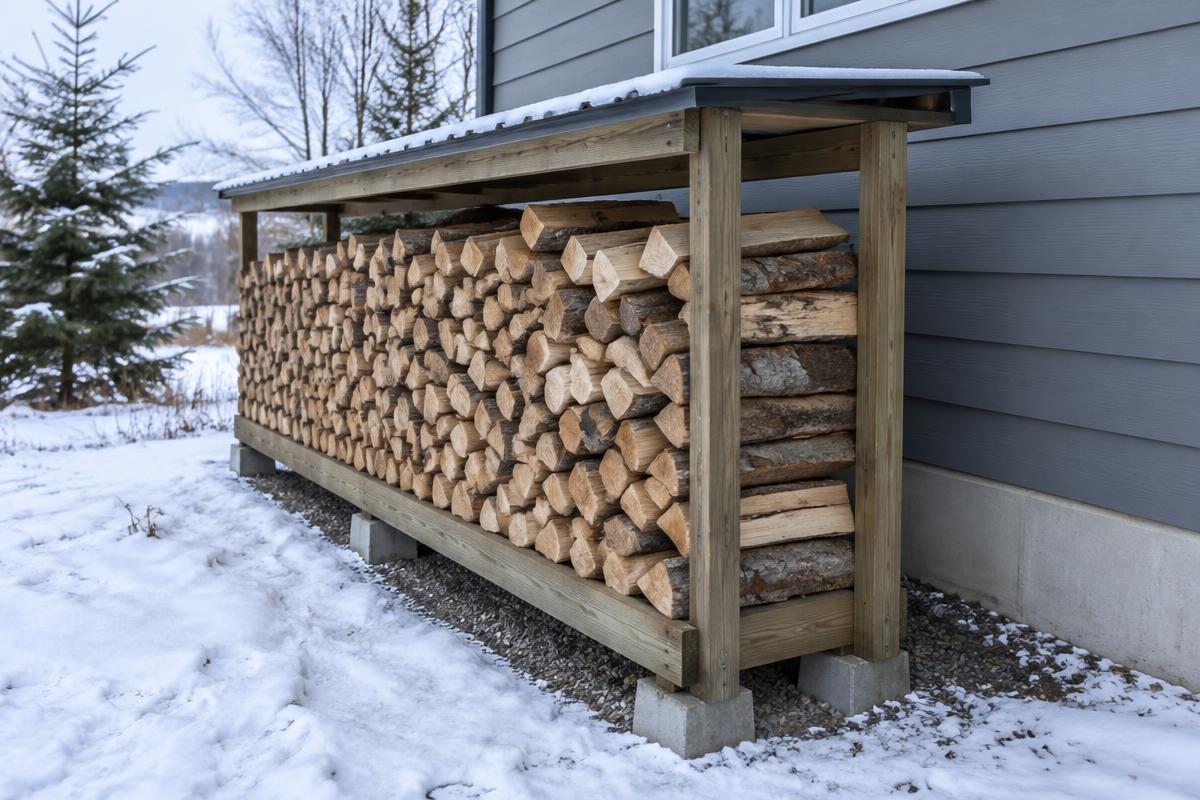
Store the main supply outside, with space between the stack and the house rather than using the exterior wall as its support. Keep wood off the ground where practical and arrange it so air can circulate. A suitable cover can protect the top from weather while leaving ventilation around the stack. Avoid enclosing damp wood in a way that prevents drying.
Choose a stable arrangement that allows safe access in winter. Keep the stack clear of doors, required building openings and equipment access. Do not climb an unstable pile or move a large stack alone to chase an insect. These are storage and maintenance habits, not a promise that outdoor firewood will be free of insects or unsuitable moisture.
Bring in only what you expect to use soon
University-extension guidance recommends keeping firewood outdoors until shortly before use rather than maintaining a large indoor reserve. Bring in a manageable amount for near-term burning. A smaller indoor supply is easier to check and keeps bark and loose debris contained. Adjust the amount to your actual use and safe handling needs instead of treating a fixed number of logs as a rule.
Look over the accessible surfaces as you bring wood in. If you notice insects, record what you see and avoid spreading the logs or bark into several rooms. Use a tidy storage area suitable for your fireplace or appliance, following its safety requirements. Pest advice does not replace instructions about clearance, ventilation, safe fuel or operation of heating equipment.
Keep the indoor storage area observable
Remove ordinary loose bark and debris from the log-storage area as part of routine housekeeping. Keep the area accessible so you can distinguish an insect beside the wood from recurring activity elsewhere. Check around the basket or rack without reaching into a hot appliance or moving materials near flames. Let any heating equipment be handled according to its operating instructions.
Do not assume holes in bark show damage to the home. Record fresh observations separately from marks already present in a log. If insects continue appearing after the indoor supply has been used or removed, note their locations and photograph them. Evidence away from the wood deserves its own assessment rather than an automatic conclusion based on the first log-side sighting.
Do not spray firewood or burn treated wood
Do not apply pesticides to firewood. Iowa State University Extension specifically advises against insecticides on logs and warns about hazards from burning insecticide-treated wood indoors. Removing or managing the source and seeking identification are more appropriate starting points than spraying a fuel supply. This article intentionally provides no pesticide application instructions.
Use appropriate untreated firewood, not pesticide-treated logs, painted scraps or pressure-treated building material. Do not burn treated wood as a way to dispose of a pest concern. If you are unsure whether wood has been treated or is suitable for your appliance, do not use it as fuel until that is clarified. Ask about suitable local disposal rather than improvising a solution indoors.
Source responsibly and ask about continued activity
CFIA advises against moving firewood because it can spread invasive pests. Buy or obtain wood locally where appropriate and check current movement restrictions before transporting it. Do not take a suspect supply to another property simply to remove it from the house. Local restrictions depend on the wood and area; consult current official guidance rather than assuming one national rule covers every trip.
Some insects emerging from firewood are nuisance visitors and do not damage wood in the home, according to Iowa State Extension. That reassurance is not a guarantee for every unidentified insect. If activity continues away from the logs, share photographs, dates and the wood’s history with Superior. Ask about identification and available residential service; do not assume a specialist firewood treatment is offered or needed.